Eliminating Hall Sensors: How Sensorless BLDC Control Cuts Costs by 30%
The Sensor Dilemma
Every Hall sensor adds three more failure points to your BLDC motor system: the sensor itself, its wiring, and connection interface. In demanding environments, these points become reliability nightmares.
At $5-15 per sensor plus installation costs, Hall-based systems inflate your bill of materials before you even consider long-term maintenance expenses. Worse, sensors fail precisely when you need them most—under high temperature, heavy vibration, or electromagnetic interference.
The Sensorless Solution
Sensorless BLDC control eliminates physical position sensors entirely, instead detecting rotor position through the motor’s own back electromotive force (BEMF). This isn’t a simplified approach—it’s a sophisticated engineering evolution that transforms how motion control systems are designed and deployed.
How It Works
When your BLDC motor rotates, permanent magnets on the rotor induce voltage in the stator windings. This back-EMF serves as a natural position sensor. By monitoring voltage patterns in the unpowered phase, intelligent algorithms determine the exact rotor position and trigger precise commutation—no hardware sensors required.
Cost Reduction Breakdown
Cost CategoryHall Sensor SystemSensorless SystemSavingsSensor Hardware$15-45 per motor$0100%Installation Labor15-30 minutes/motor5 minutes/motor67-83%Wiring Complexity3 additional wires0 additional wires100%Failure Rate3-5% annually<0.5% annually90%System IntegrationRequires calibrationSelf-adaptive50%
Total System Cost Reduction: 25-35%
Reliability Advantages in Harsh Environments
High-Temperature Applications
Traditional Hall sensors degrade rapidly above 80°C, with complete failure common at 100°C+. Sensorless systems operate continuously at temperatures up to 125°C without degradation because they rely on electromagnetic phenomena rather than electronic components.
In a compressor application where ambient temperatures regularly exceed 90°C, sensorless motors demonstrated zero sensor-related failures over 2 years of operation, compared to 23% failure rate in Hall-equipped units.
Vibration-Heavy Machinery
High-vibration environments cause Hall sensor mounting to shift, leading to signal drift and positioning errors. Sensorless systems are immune because they detect position electrically rather than mechanically.
An industrial conveyor installation experienced zero positioning accuracy degradation over 18 months with sensorless drives, whereas Hall-based systems required recalibration every 3 months due to vibration-induced misalignment.
Electromagnetic Interference (EMI) Zones
In facilities with variable frequency drives, welding equipment, or RF transmitters, Hall signals frequently get corrupted by EMI. Sensorless BEMF detection operates on the same electrical principle as the motor itself, making it inherently resistant to electromagnetic noise.
Performance Trade-offs—and How We’ve Solved Them
Challenge: Low-Speed Torque
Traditional sensorless control struggles below 10% rated speed because BEMF signals become too weak for reliable detection.
Our Solution: Adaptive startup algorithms combine open-loop acceleration with BEMF monitoring, enabling smooth startups down to 5% rated speed with 90% of rated torque.
Challenge: Rapid Direction Reversal
Bidirectional applications typically require sensors for immediate reversal capability.
Our Solution: Predictive braking algorithms determine reversal timing from deceleration dynamics, achieving full reversal in under 1 second—without sacrificing sensorless benefits.
Challenge: High-Dynamic Loads
Applications with sudden load changes can cause momentary position estimation errors.
Our Solution: Real-time observer algorithms continuously adapt to load dynamics, maintaining position accuracy within ±2 electrical degrees even during 200% load transients.
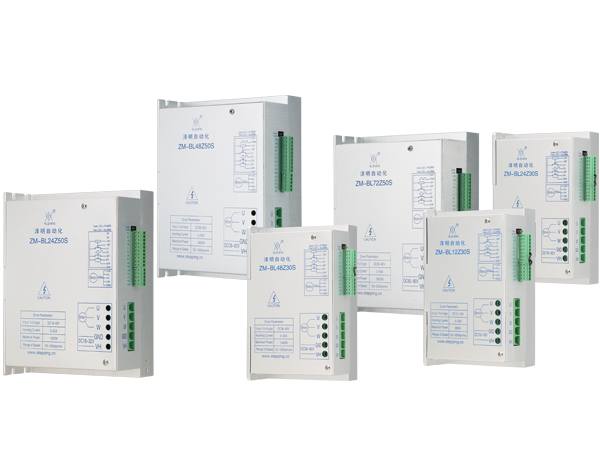
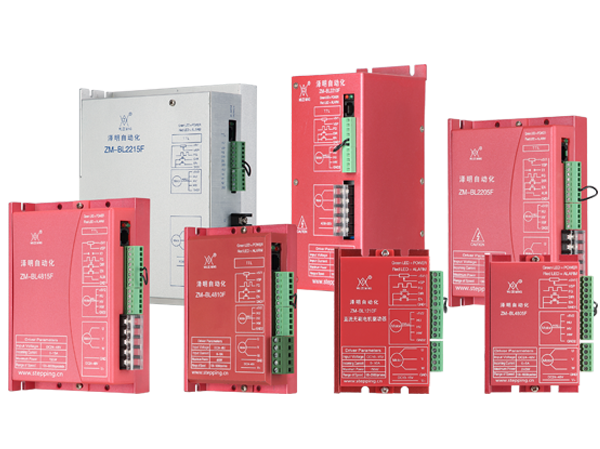
Why Our Sensorless BLDC Drivers Deliver Superior Value
Our sensorless control platform is engineered to eliminate sensor-related problems while delivering performance that matches or exceeds Hall-based systems:
Zero-Dependency Architecture: Complete elimination of sensor hardware reduces bill of materials by 15-25% and eliminates sensor-related failure modes entirely
Self-Adaptive Algorithms: Auto-tuning algorithms optimize performance for each motor without manual calibration, reducing deployment time by 60%
Wide-Temperature Operation: Reliable performance from -40°C to +125°C without sensor degradation or recalibration requirements
EMI-Immune Design: BEMF detection operates on the same electromagnetic principles as motor operation, making it inherently resistant to interference from VFDs, welding equipment, and RF sources
Proven Reliability: MTBF exceeding 80,000 hours in harsh industrial environments, with documented failure rates 90% lower than sensor-based systems
The Bottom Line
Hall sensors made sense when control algorithms couldn’t reliably extract position information from electrical signals. Today’s advanced sensorless technology has eliminated that limitation, making sensors an unnecessary cost and liability in the vast majority of BLDC applications.
The question isn’t whether you can afford sensorless control—it’s whether you can afford to keep paying for sensors that add cost, complexity, and failure points without delivering proportional value.
Contact Us
Ready to eliminate sensor-related costs and improve system reliability? Let’s discuss how our sensorless BLDC drivers can transform your application’s economics and performance.
Website: brushless.shop
Email: sibyl@brushless.shop
Phone/WhatsApp: +86 1516 118 7689
Contact us today for technical consultation and cost analysis tailored to your specific application.